In adult dogs, a sudden hind-leg limp, especially one that appears during or right after running or play, is most often a problem in the knee, and the single most common culprit is a torn or partially torn cranial cruciate ligament (CCL), the dog version of an ACL. Rest your dog on a leash, skip human pain medicine (some are toxic to dogs), and have the leg examined within a few days; limps that linger past 48 hours deserve a vet's hands on the knee.
Go to a vet now, not later, if the leg dangles or looks misshapen, your dog cannot get up at all, there's a wound or heavy swelling, the limp followed a car strike or big fall, or your dog cries when the leg is touched. Otherwise, you usually have time to observe for a day or two while keeping activity minimal.
This is the classic CCL story: a zoomie, a sharp turn chasing a ball, a yelp or not even that, and then a dog holding the leg up or toe-touching. Sometimes the limp improves with a few days of rest, then returns the moment play resumes. Two tell-tale signs: your dog sits with the sore leg stuck out to the side instead of tucked under, and you may hear a click when they walk (often a damaged meniscus).
Stiff getting up, better once moving, worse the day after a big outing: that pattern points to arthritis or hip problems, common in middle-aged and senior dogs. Worth knowing: many "hip" problems in adult dogs turn out to be slowly fraying CCLs, which is why an exam matters.
Little dogs that trot along, hold a back leg up for a few steps, then carry on like nothing happened often have a luxating patella, a kneecap that slips out of its groove. Mild cases just need monitoring; severe ones benefit from surgery.
Growing dogs get growing-bone problems (panosteitis, OCD, hip and elbow dysplasia). A young dog with a persistent limp should always be checked; early diagnosis protects adult joints.
Check the paw first: a cut pad, a torn nail, a burr or ice ball between the toes, or a bee sting can all cause dramatic limps with easy fixes.
The knee tells on itself. We feel for swelling and thickening, check the sitting posture, and test for "drawer motion" and "tibial thrust": abnormal sliding movements that only happen when the CCL is torn. X-rays confirm the pattern, rule out other causes, and show any arthritis already forming. In tense or wiggly dogs, light sedation makes the exam accurate and stress-free.
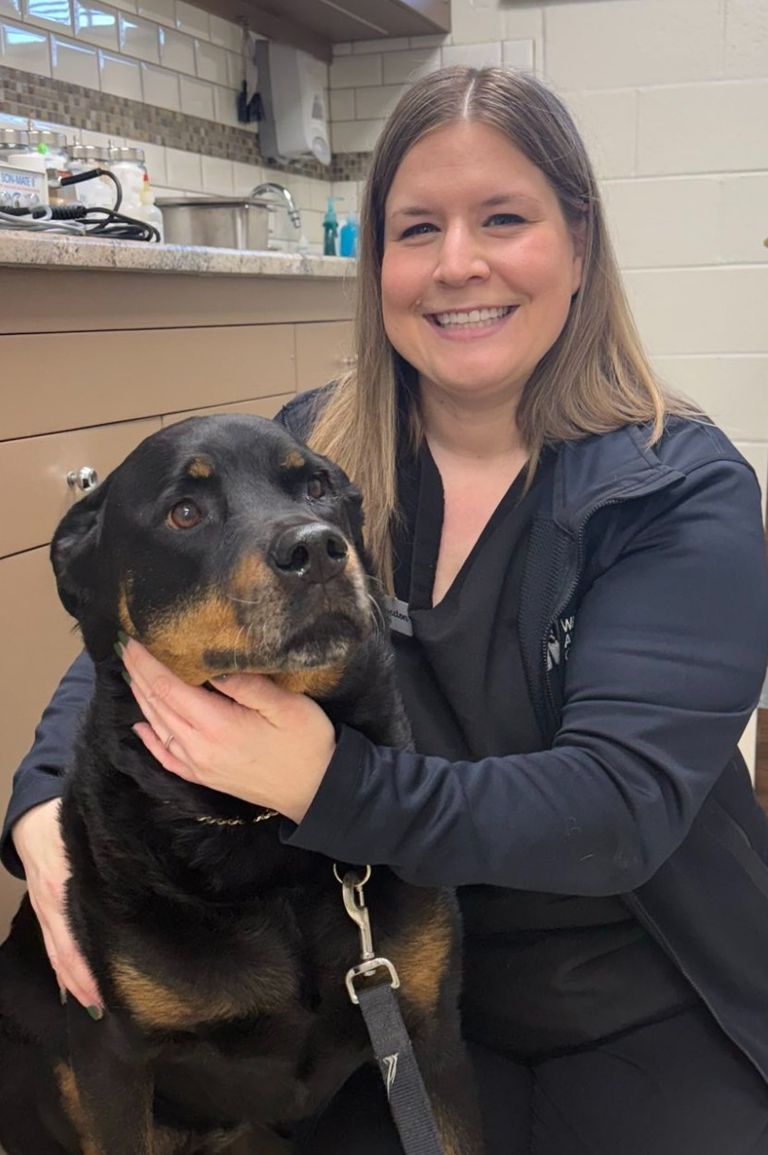
If you're in Metro Detroit or anywhere in Southeast Michigan, Dr. Dana Sweeton, DVM examines limping dogs and repairs torn knee ligaments at two clinics: Warren Animal Clinic in Warren and Veterinary Urgent Care in Madison Heights. Families come to us from Detroit, Sterling Heights, Troy, Royal Oak, Southfield, Livonia, Dearborn, Westland, Rochester Hills, Novi, Farmington Hills, Canton, Clinton Township, Macomb Township, St. Clair Shores, Ann Arbor, and beyond, with clear pricing before anything is scheduled.
It's fixable, and fixed dogs run again. Start with whether surgery is really necessary for your dog's size and tear, compare the options in our MMP vs TPLO guide, and see honest Michigan numbers in the cost guide. Dr. Dana Sweeton, DVM performs the less-invasive MMP repair at two Metro Detroit clinics, with exact pricing before anything is scheduled.
Yes. Dogs are famously stoic, and most dogs with fully torn CCLs never vocalize at all. The limp itself is the pain signal: a dog does not carry a leg for drama. Persistent limping means persistent discomfort and deserves an exam.
Maybe, if it was a strain or a paw issue. But a CCL limp classically improves with rest and returns with activity, each cycle adding arthritis. If the limp comes back when play resumes, have the knee checked.
No. Ibuprofen and naproxen are toxic to dogs even in small doses, and aspirin causes stomach bleeding and interferes with medications your vet would rather use. Call a vet for safe pain control; it's inexpensive and works far better.
An on-again, off-again hind-leg limp that improves with rest and returns with activity is the classic pattern of a fraying or partially torn CCL. Each flare adds arthritis, so a knee exam is worth booking even during a good week.
Very often, yes. A sudden hind-leg limp during or right after hard play is the classic CCL story in adult dogs. Rest your dog on a leash and have the knee examined; two tell-tale signs are sitting with the leg stuck out to the side and a click when walking.
Request a consult at dogkneecare.com, or call Warren Animal Clinic at (586) 264-4621 or Veterinary Urgent Care at (248) 547-4677, and we'll take a look at the knee and give you honest next steps.
Tell us what's going on and we'll call you back fast with honest next steps and exact pricing. Warren (586) 264-4621 · Madison Heights (248) 547-4677
Request a Consult